Macedonia
 English
 Deutsch
Global SME Financial Management Platform Market Set for Robust Growth by 2032
Друго |
2025-12-08 12:26:57
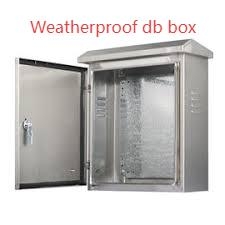
Outdoor electrical reliability begins with the right enclosure choice. In many installations, selecting a Weatherproof db box in the early design phase prevents costly retrofits and unplanned outages. A well-specified Weatherproof db box keeps moisture, dust, and thermal stress away from critical components while simplifying maintenance and expansion planning.
Every outdoor location brings a unique combination of threats: driving rain, airborne salts, UV exposure, temperature swings, mechanical impacts, and wildlife intrusion. Start by cataloguing those local hazards and identifying the most likely failure modes for electrical gear. Is the site coastal, where chloride-driven corrosion is a concern? Is it in a high-traffic area that risks impact damage? A measured site survey informs whether you need elevated protection, enhanced gasketing, or a specific fastener type.
Material selection determines how an enclosure will age. Metallic enclosures with proper passivation or powder coatings resist corrosion for longer; stainless steel stands up best in marine environments, while aluminium offers weight advantages with good corrosion resistance when properly treated. For polymer enclosures, look for UV-stabilized formulations and flame-retardant ratings appropriate for the application. Gaskets deserve equal attention: silicone and EPDM maintain elasticity and create durable seals across a wide temperature range, keeping out moisture and dust.
Temperature differentials between day and night can create condensation inside an otherwise sealed enclosure. Managing thermal transfer — using insulation, internal airflow channels, thermostatically controlled heaters, or breathable membranes — reduces the risk of moisture-related faults. When heat-generating components are present, plan for convective paths or filtered vents that block particulates while allowing heat to escape. Consider thermostatically actuated fans or heat-sinking strategies for densely packed modules.
Manufacturers vary in how they validate weatherproof performance. Look for vendors that supply well-documented test results — IP and NEMA ratings, salt spray outcomes, and thermal cycling data — so you can compare apples to apples. A supplier who values modular chassis designs, replaceable seals, and standardized mounting plates will help installers and service teams respond faster and manage lifecycle costs more predictably.
Even the best enclosure will fail if poorly installed. Proper mounting minimizes vibration, prevents water pooling on horizontal surfaces, and ensures cable entries remain sealed. Use gland plates and bottom-entry designs for wet locations, and fit surge protection and lockable access where tamper resistance is important. Plan for future growth: leave room for additional DIN-rail space, label wiring clearly, and make sure technicians can reach breakers and terminal blocks without disassembling the entire panel.
Routine inspection beats emergency repairs. Build a site-specific checklist: verify seal compression, check for fastener corrosion, confirm drain points are clear, and test internal heaters or dessicants after severe weather. Record incidents of condensation, corrosion progression, and any physical impacts so you can refine material and mounting choices for future projects. A proactive spare-parts strategy — keeping common gaskets, fasteners, and fuses on hand — shortens downtime when a component does fail.
Choosing a weatherproof enclosure involves engineering trade-offs among weight, cost, thermal performance, corrosion resistance, and serviceability. By thinking holistically about the environment, the expected loads, and the maintenance regime, owners and designers can pick an enclosure that reduces lifecycle costs and improves operational uptime. For additional technical resources and a case study on outdoor distribution panels, see https://www.nante.com/news/industry-news/outdoor-electrical-distribution-panel-nante.html