English
 Macedonia
 Deutsch

Appetite Stimulant Market Size and Future Trends Reshaping Clinical Nutrition
Градинарство |
2026-05-27 11:05:08
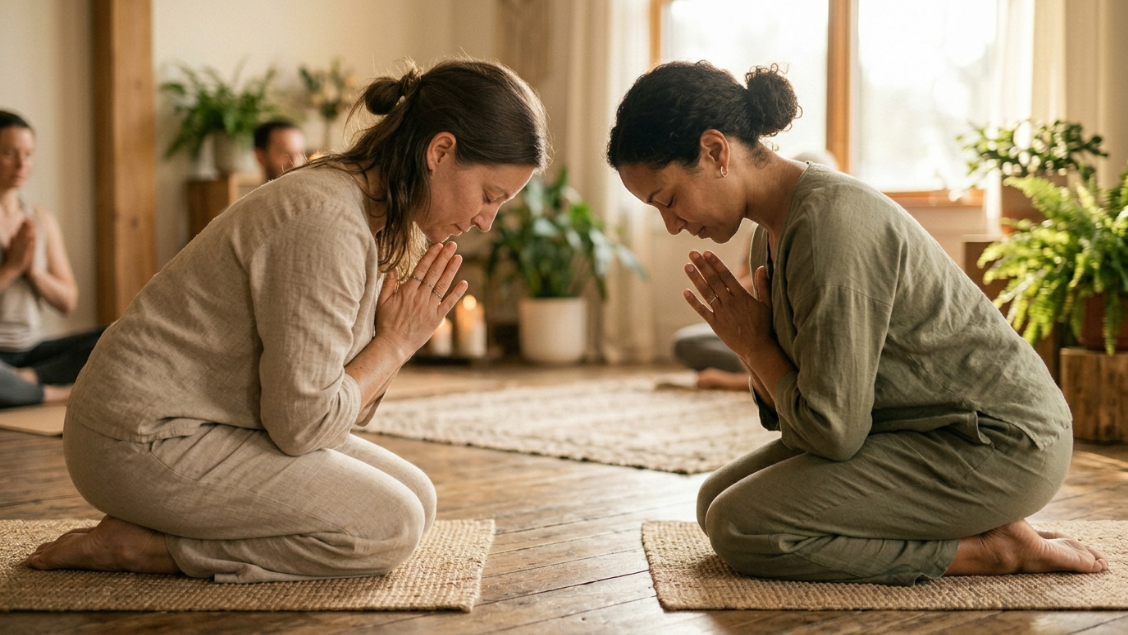
Few words are as widely recognized — and as commonly misunderstood — as "Namaste." Understanding the actual Namaste meaning requires looking past its casual use as a yoga class sign-off and toward its Sanskrit roots.
Linguistically, the word combines elements roughly translating to "bow" and "to you," producing a meaning closer to "I bow to you" than the more mystical interpretations sometimes attributed to it in Western fitness culture. This straightforward translation reflects a gesture of respect and acknowledgment between people rather than a complex spiritual statement. It's a greeting rooted in everyday courtesy as much as spiritual practice, used historically in contexts well beyond yoga itself.
In traditional contexts, the word is often paired with a gesture — palms pressed together near the heart, accompanied by a slight bow. This physical pairing reinforces the verbal meaning, expressing humility and recognition of the other person's presence and dignity. The hand position itself, sometimes called Anjali Mudra, is considered meaningful independent of the spoken word, often used in meditation as a gesture of reverence on its own.
The popular Western interpretation — something along the lines of "the light in me honors the light in you" — while poetic, is largely a modern reinterpretation rather than a literal translation. This doesn't make the sentiment invalid, but understanding the gap between literal meaning and popular interpretation offers a more grounded appreciation of the word's origins. Many yoga teachers now explain both versions side by side, allowing students to appreciate the historical root while still connecting with the more expansive modern interpretation.
In yoga practice specifically, the word often marks a transition point, typically used at the close of a class to acknowledge the shared experience between instructor and students, or among practitioners themselves. Some teachers also use it at the start of class, framing the entire session as a shared, mutually respectful experience from the outset.
For those interested in the broader philosophical context behind common yoga terminology, ShaolinMart offers educational content alongside its mindfulness-focused product collections.
Similar greeting customs exist in other cultures and languages, often carrying comparable themes of mutual respect and acknowledgment, even without an identical word-for-word translation. Recognizing this broader pattern helps frame Namaste not as an isolated curiosity but as part of a wider human tendency to formalize respect through specific words and gestures during greetings. This perspective can be particularly useful for yoga teachers introducing the term to students unfamiliar with Sanskrit, since drawing a parallel to a more familiar greeting custom often makes the concept feel more accessible and less like an exotic borrowed phrase.
FAQ
Does Namaste have religious significance? It originates from Sanskrit greeting customs rather than being exclusively religious, though it appears within Hindu and yogic traditions.
Is the common Western translation of Namaste accurate? The popular poetic translation is a modern interpretation; the more literal meaning is closer to "I bow to you."
When is Namaste typically used in yoga classes? It's most commonly used at the end of a class to acknowledge the shared practice between instructor and students.
What does the hand gesture that accompanies Namaste mean? Known as Anjali Mudra, the palms-together gesture is considered meaningful on its own, often used as a gesture of reverence in meditation.
Are there similar greeting customs in other cultures? Yes, many cultures have formal greetings emphasizing mutual respect, even if the specific words and gestures differ from Namaste.