English
 Macedonia
 Deutsch

Okra Snacks Market Research Report: Growth Forecast, Competitive Analysis & Emerging Opportunities
Друго |
2026-07-10 06:21:33
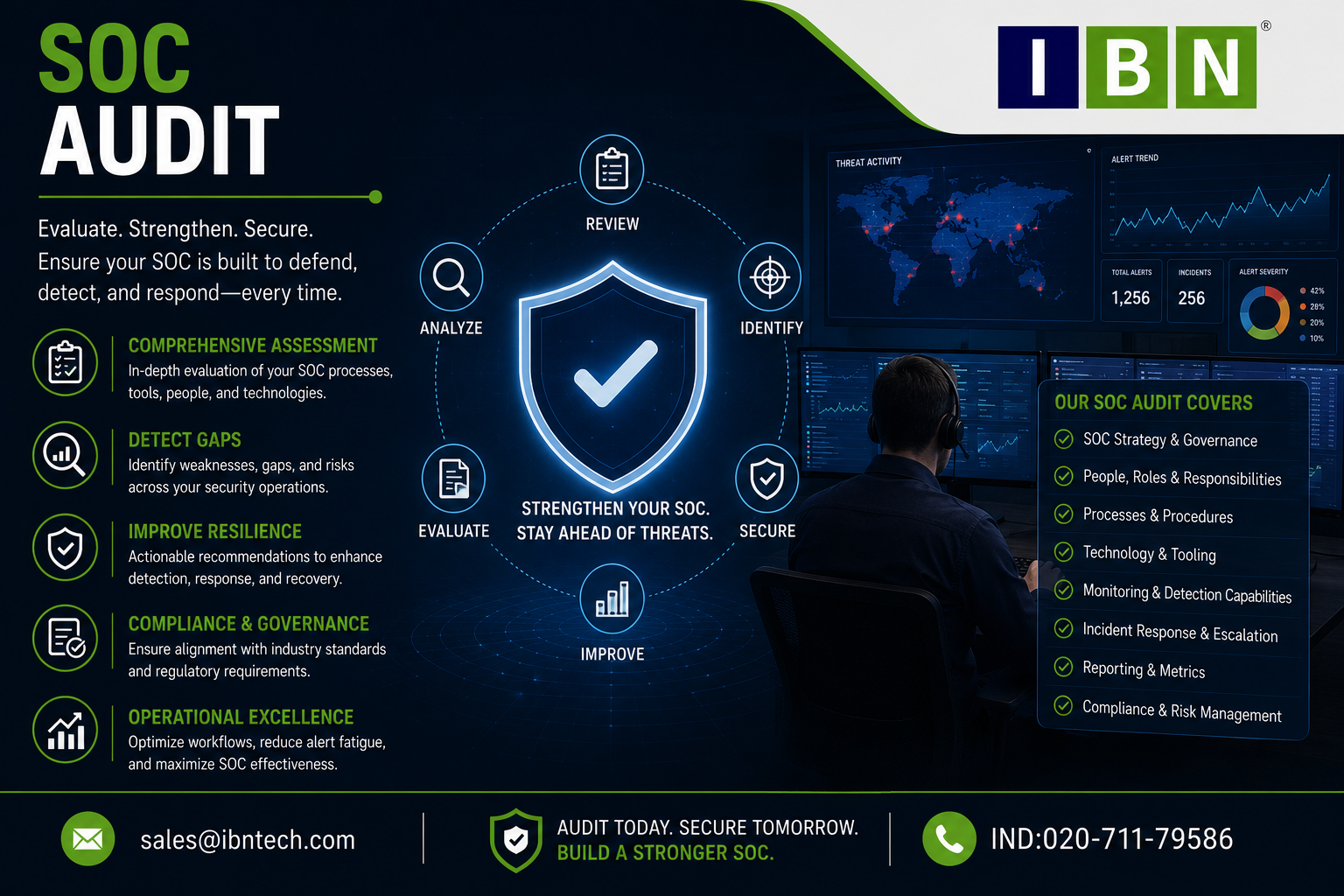
Complete SOC Audit Checklist for India
Digital healthcare continues to transform patient care across India. Hospitals, specialty clinics, diagnostic laboratories, and telemedicine providers depend on interconnected systems to deliver timely medical services. As healthcare organizations expand their digital footprint, cybersecurity becomes a critical operational priority. A SOC audit enables organizations to evaluate whether their Security Operations Center (SOC) is prepared to detect, investigate, and respond to security incidents effectively. A structured SOC readiness assessment ensures that security operations can support both business continuity and patient data protection.
Rather than waiting for a security incident to expose operational weaknesses, organizations should periodically assess the maturity of their security operations.
Why Healthcare Organizations Need a SOC Readiness Assessment
Healthcare environments are among the most complex IT ecosystems. Security teams are responsible for monitoring multiple technologies simultaneously, including:
Without a comprehensive readiness assessment, organizations may struggle to identify monitoring gaps that could delay incident detection.
A SOC audit evaluates whether security operations are capable of protecting these environments through continuous monitoring and well-defined response processes.
Indicators That Your SOC May Need an Audit
Many healthcare organizations already operate security technologies but remain uncertain about their operational effectiveness.
Some common indicators include:
These challenges often indicate the need for a structured operational review.
Components of an Effective SOC Audit
A comprehensive SOC audit evaluates both technology and operational performance.
The assessment generally includes:
|
Assessment Area |
Objective |
|
Security Monitoring |
Confirm complete visibility across healthcare systems |
|
Threat Detection |
Measure the effectiveness of alert generation |
|
Log Collection |
Verify data from critical systems and devices |
|
Incident Response |
Review investigation and escalation workflows |
|
Reporting |
Assess operational reporting and management visibility |
|
Process Improvement |
Identify opportunities to strengthen security operations |
Reviewing these areas helps organizations develop a practical roadmap for continuous improvement.
Why Readiness Matters More Than Technology Alone
Many healthcare providers invest in advanced cybersecurity solutions but fail to evaluate how effectively they work together.
Technology alone cannot guarantee security.
Organizations should also review:
A SOC readiness assessment provides this operational perspective, helping organizations identify weaknesses before they affect patient services.
How Managed SIEM and Managed SOC Services Support Readiness
Healthcare providers often rely on Managed SIEM and Managed SOC services to improve security visibility while reducing operational complexity.
These services typically include:
A SOC audit helps determine whether these services are delivering the expected level of operational effectiveness and supporting organizational objectives.
Benefits of Conducting a Readiness Assessment
Organizations that regularly assess their Security Operations Center gain several long-term advantages.
Stronger Threat Detection
Improved monitoring helps identify suspicious activities before they impact clinical operations.
Better Incident Response
Clearly defined response procedures reduce investigation time and improve coordination among security teams.
Improved Operational Visibility
Leadership teams receive meaningful insights into the effectiveness of security monitoring.
Better Resource Allocation
Assessment findings help prioritize cybersecurity investments based on operational needs.
Enhanced Business Continuity
Well-prepared security operations reduce the likelihood of disruptions that could affect patient care.
Healthcare Industry Use Case
A healthcare network operates multiple hospitals and diagnostic centers using cloud-based patient management systems and connected medical devices.
The organization has deployed several cybersecurity tools but wants to verify whether its Security Operations Center is prepared to respond to advanced cyber threats.
The SOC audit identifies:
Addressing these findings enables the organization to strengthen monitoring capabilities and improve operational resilience.
SOC Readiness Assessment Checklist
Organizations preparing for a SOC audit can use the following checklist to evaluate their readiness:
Following this checklist supports continuous improvement while helping organizations maintain a mature cybersecurity program.
Compliance Context
Healthcare organizations must protect sensitive patient information while ensuring uninterrupted access to clinical services. Regular operational assessments demonstrate that security monitoring processes are reviewed and improved as part of ongoing governance initiatives.
A comprehensive SOC audit, supported by a structured SOC readiness assessment, helps healthcare organizations build stronger security operations, improve incident response capabilities, and maintain resilience against evolving cyber threats. By continuously evaluating people, processes, and technologies, healthcare providers in India can create a more secure digital environment that supports quality patient care and long-term operational stability.
Contact Us:
IBN Technologies LLC:
Email: sales@ibntech.com