English
 Macedonia
 Deutsch

Dissolved Oxygen Analytical Transmitter Market to Reach $7.5B
Друго |
2026-07-18 10:34:30
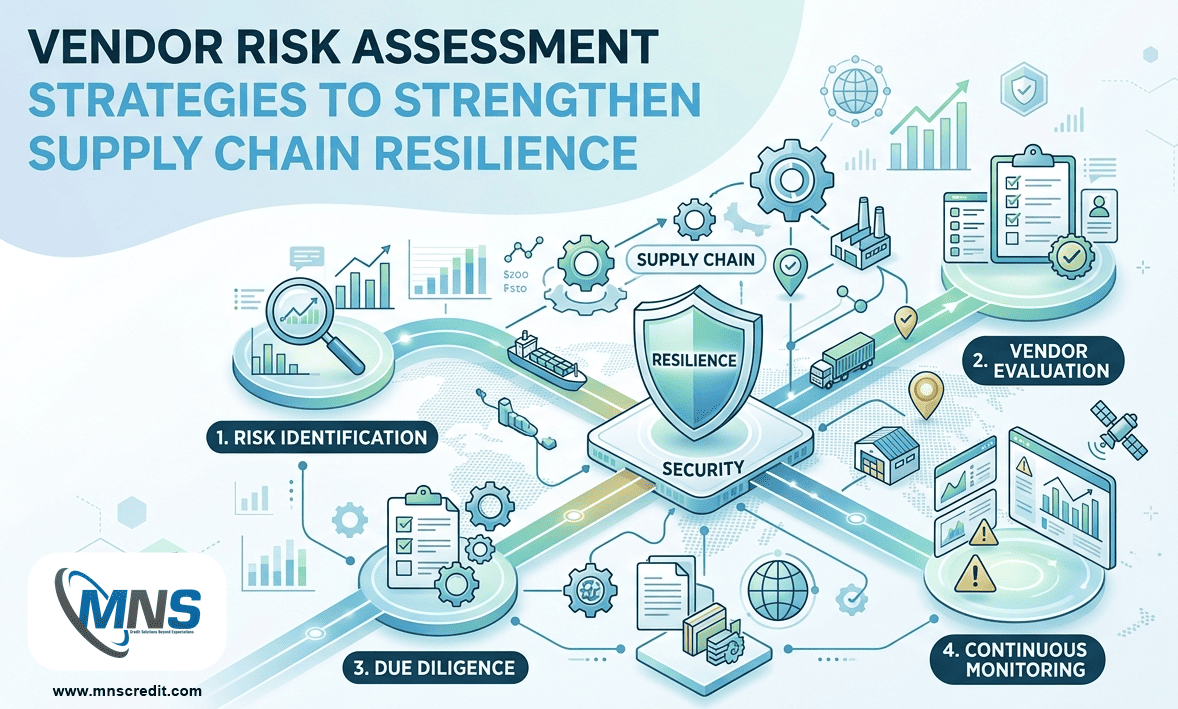
Supply chains today run through dozens, sometimes hundreds, of vendors — raw material suppliers, logistics partners, contract manufacturers, and service providers spread across multiple geographies. Each one is a potential point of failure. A single vendor's financial collapse, compliance violation, or operational disruption can ripple through production schedules, customer commitments, and revenue. Vendor risk assessment is no longer a procurement formality; it is a core discipline for building supply chains that can absorb shocks rather than transmit them.
This article outlines the categories of vendor risk that matter most and the practical strategies organizations are using to assess, monitor, and reduce vendor-related exposure.
Recent years have shown how quickly a single point of failure in the supply chain can cascade. Vendor bankruptcies, factory shutdowns, cyberattacks on third-party service providers, and sudden regulatory action against suppliers have all disrupted operations for companies that had no direct control over the triggering event. At the same time, regulators are pushing accountability further down the supply chain — buyers are increasingly expected to demonstrate that they assessed and monitored the risk profile of their vendors, not just their own operations.
A structured vendor risk assessment program addresses this by identifying risk before it materializes into disruption, rather than reacting after a vendor has already failed to deliver.
Financial risk — A vendor's deteriorating financial health (falling revenue, rising debt, delayed payments to its own suppliers) is often the earliest warning sign of future non-performance. Financial distress at a critical vendor can mean missed deliveries, quality shortcuts, or sudden business closure.
Operational risk — Capacity constraints, single-location production, poor quality control, or dependence on a narrow set of sub-suppliers all increase the likelihood that a vendor cannot meet your delivery and quality requirements consistently.
Compliance and regulatory risk — Vendors operating without proper licenses, violating labour or environmental regulations, or falling foul of sector-specific requirements expose buyers to reputational damage and, in regulated industries, direct liability.
Cybersecurity risk — Vendors with access to your systems, data, or networks represent an extension of your own attack surface. A vendor's weak security posture can become the entry point for a breach that affects your organization directly.
Geopolitical and concentration risk — Overreliance on vendors concentrated in a single region or country exposes supply chains to trade restrictions, currency shocks, political instability, or natural disasters affecting that geography.
Reputational risk — Association with a vendor involved in unethical practices, fraud, or public controversy can damage a buyer's brand even when the buyer had no direct involvement.
Not every vendor warrants the same level of scrutiny. Classify vendors by criticality — based on spend, substitutability, and impact of disruption — and apply proportionately deeper assessment to your top-tier, business-critical vendors.
Build a consistent scoring framework across financial stability, compliance status, operational capability, and cybersecurity posture. Standardization allows procurement and risk teams to compare vendors objectively and track risk trends over time, rather than relying on ad hoc judgment calls.
Don't rely solely on vendor-submitted financials. Independently verified company risk reports — covering registration status, ownership, litigation history, and credit standing — provide an objective baseline that self-reported data cannot match, and are particularly important before onboarding new, high-spend vendors.
Vendor risk assessment should be a gating step before a purchase order or master service agreement is signed, not a retrospective exercise once problems appear. This includes legal entity verification, licensing checks, and screening against sanctions and adverse media databases.
Vendor risk is not static. A financially healthy vendor today can be in distress within a year. Set up periodic re-assessment — annual for critical vendors, less frequent for lower-tier ones — and use automated alerts for triggers such as credit downgrades, litigation filings, or negative news.
Where a single vendor or region represents a disproportionate share of a critical input, build qualified backup vendors into the supply chain, even if they carry a marginal cost premium. Resilience often costs more upfront but is far cheaper than a production stoppage.
Contractual protections — audit rights, minimum insurance requirements, data security obligations, and termination triggers tied to financial or compliance deterioration — turn risk assessment findings into enforceable safeguards rather than static reports.
A vendor risk scorecard, reviewed quarterly or annually, keeps risk visible to both procurement and senior management. It also creates an internal record demonstrating that risk was actively managed, which matters increasingly for regulatory and audit purposes.
In India, regulated buyers should factor in RBI and sector-specific guidance on third-party risk management when structuring vendor oversight. For organizations operating in or through the Middle East, frameworks from the CBUAE and free zone regulators like DIFC and ADGM increasingly expect documented third-party risk processes, particularly for financial and trade-related vendors.
Vendor risk assessment strategies only strengthen supply chain resilience when they are embedded into ongoing operations, not treated as a one-time onboarding exercise. The organizations best positioned to withstand supply chain shocks are those that combine independently verified business information reports with continuous monitoring, tiered oversight, and contractual safeguards — converting vendor risk from a blind spot into a managed, visible part of the business.
Supply chains are only as strong as the weakest vendor within them. A disciplined vendor risk assessment program — built on independent verification, tiered scrutiny, and continuous monitoring — allows organizations to catch financial, operational, and compliance risks before they become supply chain disruptions. In a business environment where a single vendor failure can halt production or trigger regulatory scrutiny, vendor risk assessment has moved from a procurement best practice to a strategic necessity.