English
 Macedonia
 Deutsch

Corrosion Protection Coatings Market Insights and Growth Trends 2025 –2032
Здравје |
2026-05-13 06:58:13
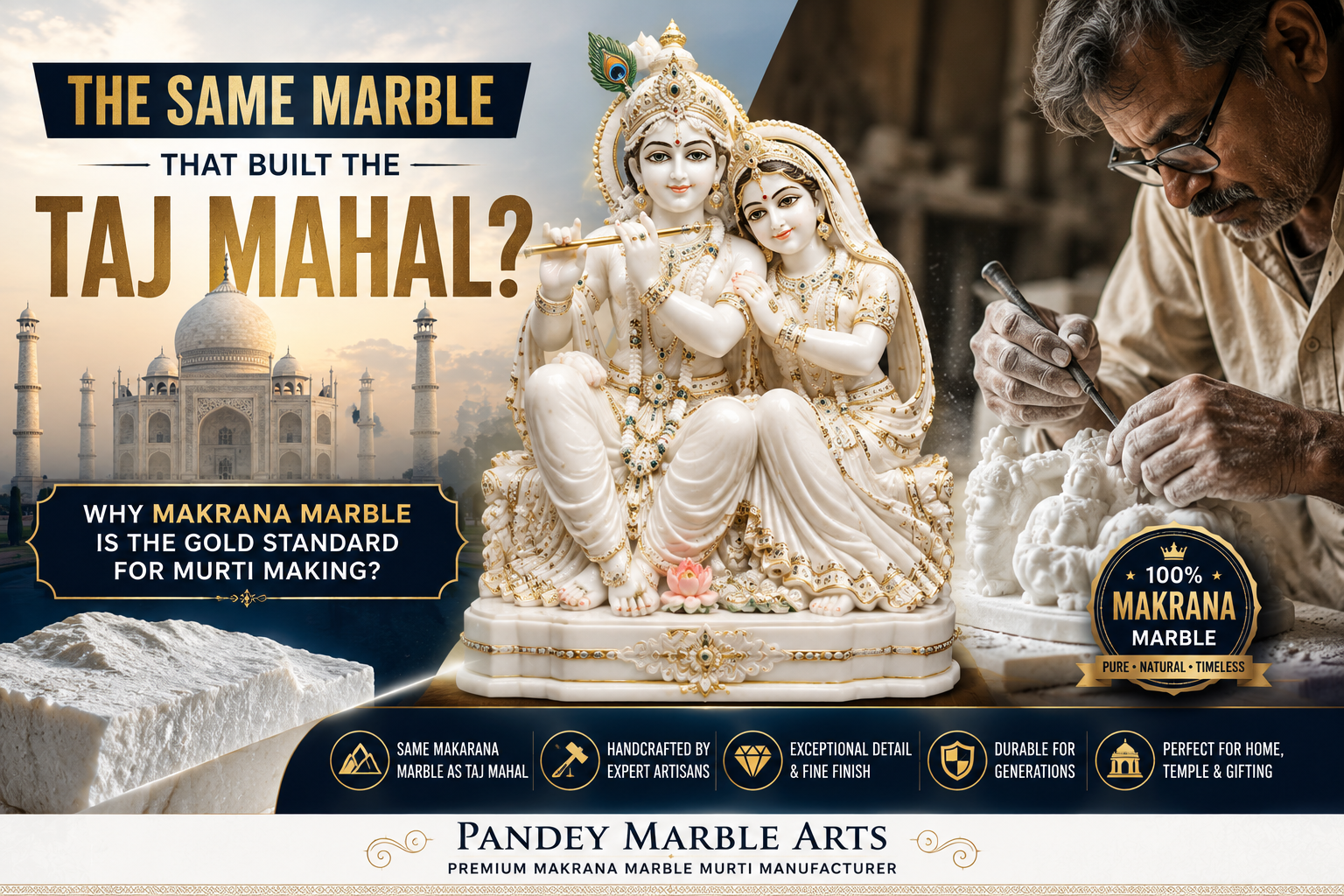
Visit any Hindu temple, and one thing that never goes unnoticed is the divine charm of the deity’s idol. The shine remains as it is recently polished, the facial details remain sharp, and the idol’s aura continues to feel alive. In most temples, especially in northern India, the material behind this lasting beauty is Makrana Marble, which is considered the gold standard of moorti making for centuries.
For many people who plan to welcome deities in the form of a murti, the material selection is often an afterthought. They prioritize size, posture, design or carving style. Although these aspects are undoubtedly important, what’s more important is choosing the right material for the idol.
Not every material remains the same over time. Some may lose sharp carving, while others may dull after years of cleaning and worship. However, Makrana marble continues to remain the sculptor’s first choice for sacred carvings. But why? How is Makrana marble better than other materials? Let’s find out through this detailed guide.
Makrana Marble is one of the highest grades of marble, sourced from Makrana city in Rajasthan. For centuries, Makrana marble has been used for moorti making, temple architecture, sculptures and stone carving. The fact that makes Makrana marble different from other varieties is its natural structure, grains, density and ability to maintain appearance for a long time.
Unlike many commercial-grade marble varieties that focus mainly on synthetic polishing, Makrana marble has a natural shine, better carving quality and durability. It remains the first choice for sculptors as it can handle intricate carving without chipping.
For a layman, all white marble looks similar after polishing. However, the difference starts to emerge after continuous years of worship, regular hand touches and cleaning. If the quality of the marble murti isn’t up to the standard, certain problems may start to appear:
Surface loses smoothness
Fine carving starts fading
Small cracks may appear
Colour becomes uneven
Shine reduces quickly
a marble idol is not meant for a short period, but something that remains with the family for generations. These days, many online sellers have started a new scam by selling marble dust god idols in the name of Makrana marble. However, marble dust statues have no spiritual significance and are not durable enough to withstand daily worship, cleaning, and seasonal changes.
Marble dust statues are made by moulding crushed marble powder with binding agents, whereas original Makrana marble idols are carved from a single natural stone block.
The white colour in Hindu traditions is associated with purity, holiness, joy, light, and victory. The whiteness does not feel artificial, but something that carries a calm and balanced tone suitable for spiritual spaces.
In murti making, this matters even more as facial expressions, ornaments, drapery details and symbolic elements become more visible on the white surface. Many moortikars even believed that fine features look sharper when carved into White Makrana marble compared to other materials.
In our Hindu tradition, we don’t see Gods idols as merely a sculpture but a living presence of the deity themself. Once consecrated through Pran Pratishtha, the deity's energy (Pran) is believed to reside within the idol itself.
Makrana marble, with its pure crystalline structure and purity, is considered especially receptive to divine vibration. Unlike synthetic materials or inferior stone, it genuinely holds pran (living energy) within it.
A skilled artist carefully carves the marble block and transforms it into a life-like idol of deities. Every curve, eyeline, finger, ornament, and clothing texture should be intricately detailed to match the deity's appearance, according to Shilp Shastra.
For such fine detailing, the stone must be strong enough to preserve delicate features while also being workable enough to carve without chipping. And Makrana marble perfectly fits into these parameters.
The durability of the marble murti is what allows it to retain its beauty and presence for years to come. Makrana marble has a solid internal structure that can resist everyday wear and withstand exposure to:
Daily abhishek
Seasonal humidity
Continuous public interaction
Decorative materials
Material that performs well in these conditions naturally becomes part of the moorti making process. The trust is one of the main reasons why Makrana remains the preferred material for a premium marble moorti.
The best thing about Makrana marble is that it is a natural stone and doesn’t undergo excessive treatment for polishing and shine. Although the idols need polishing, the brightness comes largely from the natural quality and density of the stone itself, rather than artificial coatings. Good finishing doesn’t always mean a mirror-like shine.
Makrana marble allows artisans to achieve a refined finish while preserving hand-carved details. That’s why many families prefer Makrana marble statues instead of relying on materials that use artificial enhancements.
Not every white marble murti sold in the market is made from original Makrana marble. As said earlier, many sellers are using tricks to sell marble dust idols or chemically treated stone in the name of Makrana marble because it looks similar at first glance.
To identify an original Makrana marble murti, here’s a list of a few tips:
Observe the colour
Good quality marble usually shows natural, balanced whiteness.
Check carving sharpness
Edges should appear clean, not broken or blurred.
Ask about the source
Reliable makers generally disclose stone origin.
Inspect consistency
Large variations in texture may indicate mixed-grade stone.
Look beyond polish
Heavy polish should not become the only sign of quality.
Buying from a trusted marble moorti manufacturer like Pandey Moorti Bhandar usually reduces the chances of choosing the wrong material.
Makrana Marble didn’t become the gold standard for moorti making because of marketing or trends, but due to its durability, natural beauty, longevity and spiritual significance.
While selecting a marble murti for a temple or home, it's important to pay the same attention to the material as the design. It should not only look divine on the day it arrives, but keeps the same charm and aura after years of worship and care.
At Pandey Moorti Bhandar, we approach every marble moorti with the same belief that stone selection matters as much as sculpting itself. And our wide range of marble Hindu God idols is evidence of this commitment.